

Escrow
Kleros Escrow is a decentralized escrow platform that secures blockchain transactions between untrusted parties. It combines smart contract automation with Kleros’ decentralized arbitration system to provide trustless transaction security for digital commerce. Traditional online transactions require trust between strangers, creating opportunities for fraud and disputes. Kleros Escrow eliminates this trust requirement by securing funds in smart contracts and delivering decentralized arbitration through Kleros Court when agreements fail.V1 - Production Protocol
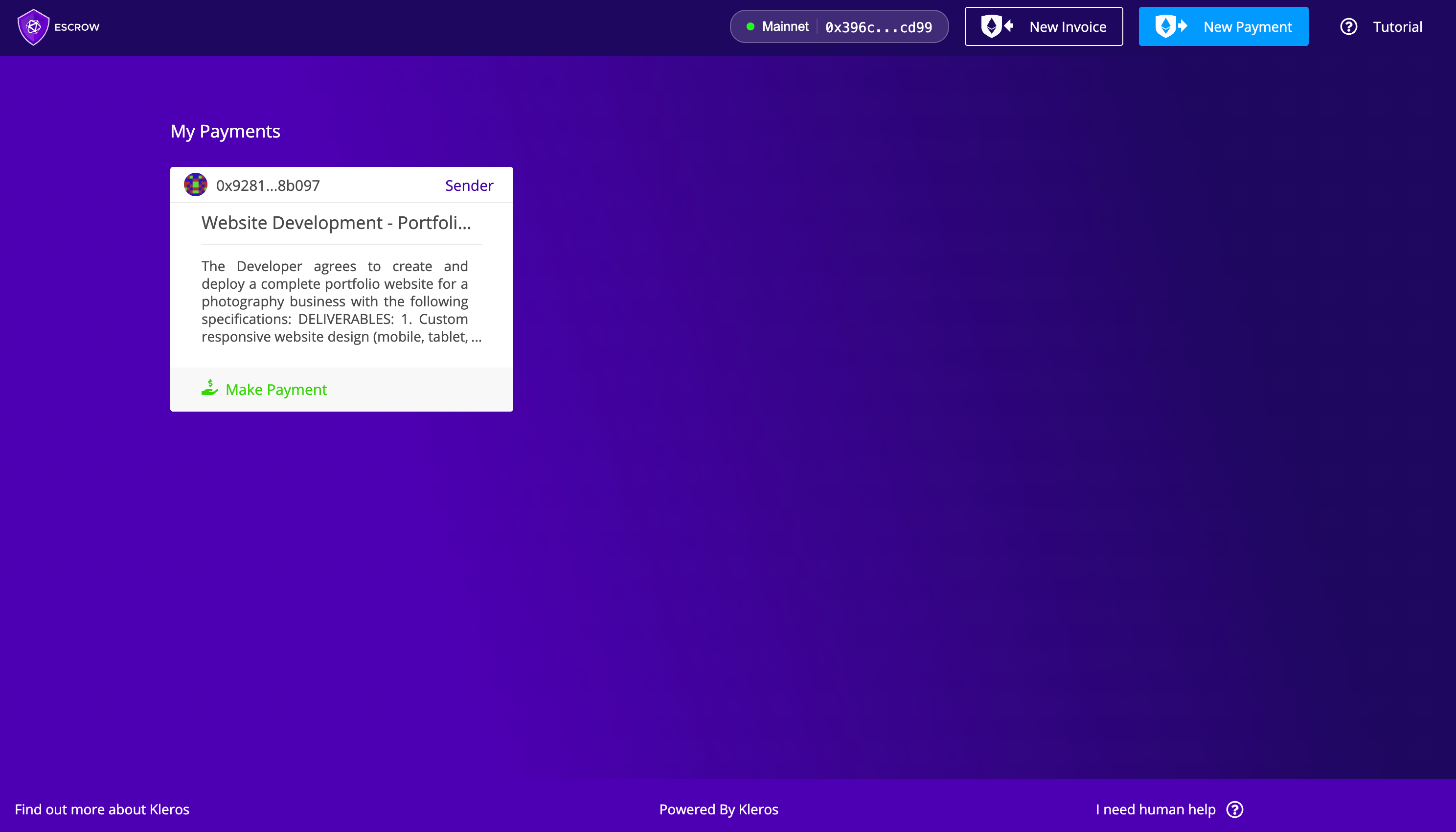
Escrow V1 runs on Ethereum Mainnet. Two parties lock funds in a smart contract, with Kleros Court available as the dispute resolution mechanism if they disagree.- Network: Ethereum Mainnet
- Model: Two-party escrow with basic settlement
- Tokens: ETH and standard ERC-20 tokens (non-standard tokens such as USDT are not supported)
- Evidence & appeals: Handled by the escrow contract
V2 - Next-Gen Upgrade
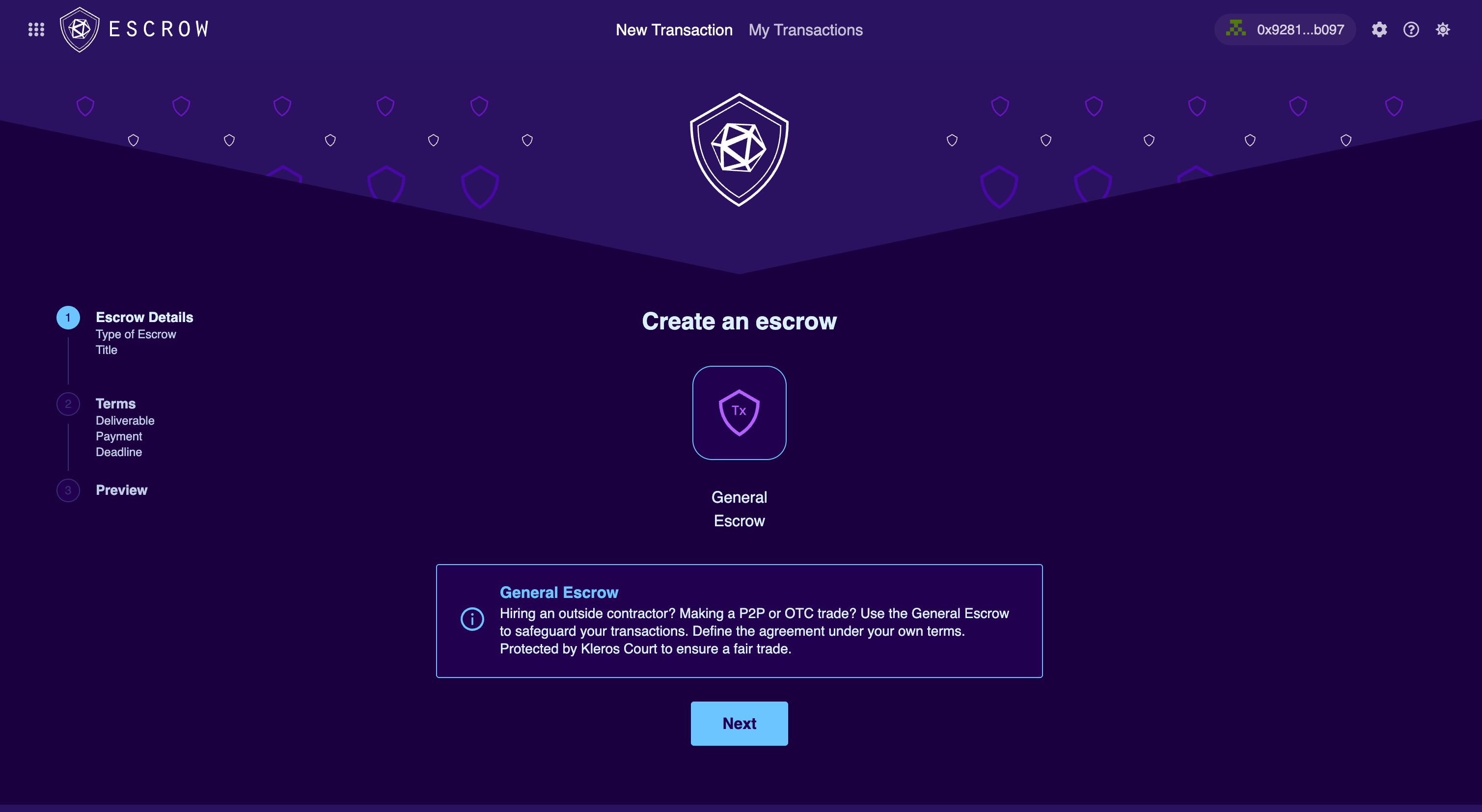
Escrow V2 runs on Arbitrum and adds structured settlement negotiation, multi-token support (ETH, USDC, USDT, DAI, or any ERC-20 viaSafeERC20), and moves evidence and appeal handling to the Court.
What Changed in V2
Current Status
As of the May 2026 development update, Escrow completed its Atlas IPFS migration, with UX improvements to the agreement upload step. Follow development on the Kleros blog - developer updates.Key Capabilities
Smart Contract Security
Funds secured in smart contracts before service delivery
Settlement Negotiation
Structured negotiation process for partial disputes
Multi-Token Support
Pay with ETH, USDC, USDT, DAI, or any ERC20 token
Decentralized Arbitration
Kleros Court resolves disputes when agreements fail
Zero Platform Fees
Completely free to use-only pay network gas fees
Automatic Enforcement
Smart contracts automatically execute rulings
How It Works
1
Creation
Buyer creates escrow transaction specifying seller, amount, deadline, and terms.
2
Fund Locking
Payment is secured in the smart contract using ETH or chosen token.
3
Delivery Period
Seller provides agreed service/product before the specified deadline.
4
Resolution
Transaction concludes through payment, settlement, manual deadline execution, or arbitration.
Resolution Mechanisms
Kleros Escrow V2 provides multiple ways to resolve transactions:- Direct Payment
- Settlement
- Deadline Execution
- Dispute Resolution
When parties fully agree
- Full Payment: Buyer releases entire amount to seller when satisfied
- Full Refund: Seller returns entire amount to buyer if unable to deliver
- Partial Transactions: Either party can process partial amounts for completed portions
V2 Improvements
Token Selection
1
Choose Payment Type
Select ETH, pick from popular tokens, or enter a custom token address
2
Verification
System verifies the token works with Escrow
3
Set Amount
Enter your amount and proceed with the transaction
Token transactions may have maximum amount caps set by governance for risk management.
Use Cases
Service Contracting
Service Contracting
A marketing agency and client use escrow for a social media campaign. If the client is partially satisfied, they can propose a settlement amount. The agency can accept, counter-propose, or proceed to dispute resolution.
Cryptocurrency Trading
Cryptocurrency Trading
Traders exchanging ETH for assets on other blockchains use escrow for security. One party locks ETH while the other transfers external assets. If issues arise, parties can negotiate or use dispute resolution.
Freelance Projects
Freelance Projects
A company hires a developer for a web application. The developer works knowing payment is secured, while the company can test the deliverable and release payment, negotiate, or dispute if necessary.
Physical Product Sales
Physical Product Sales
An artist sells custom artwork to a collector through escrow. The buyer has until the deadline to inspect. If there are quality concerns, the buyer can propose partial payment or raise a dispute.
Cost Structure
Benefits
- For Buyers
- For Sellers
- For Ecosystem
- Payment Protection: Funds remain secure until delivery confirmation
- Quality Assurance: Clear recourse for non-delivery or substandard work
- Flexible Resolution: Settlement negotiation for partial completion
- Fair Arbitration: Access to impartial Kleros Court
- Partial Payments: Release funds incrementally as work progresses
Best Practices
For Buyers
- Set realistic deadlines (execution requires manual triggering)
- Define clear deliverables
- Keep communication records for potential disputes
- Consider milestone payments for large projects
For Sellers
- Verify escrow funding before starting work
- Document progress and communications
- Communicate proactively about delays
- Understand deadline implications
- Use detailed descriptions with clear terms and success criteria
- Keep all communication records as evidence
- Understand that settlement proposals don’t transfer funds until accepted
- Consider settlement before escalating to disputes
Getting Started
1
Connect Wallet
Use MetaMask, Rabby, or any compatible Web3 wallet
2
Choose Payment
Select ETH or your preferred token
3
Create Transaction
Specify counterparty, amount, terms, and realistic deadline
4
Fund Escrow
Transfer payment to the secure smart contract
5
Track & Resolve
Monitor status, then release payment, negotiate settlement, or dispute
What’s Next?
Create Escrow
Start a new escrow transaction
Integration Guide
Build escrow into your application
Dispute Resolution
Learn how Kleros Court works
Quick Links
Launch Escrow
Open the Escrow application
Contract Addresses
Escrow V2 deployment addresses